Introduction
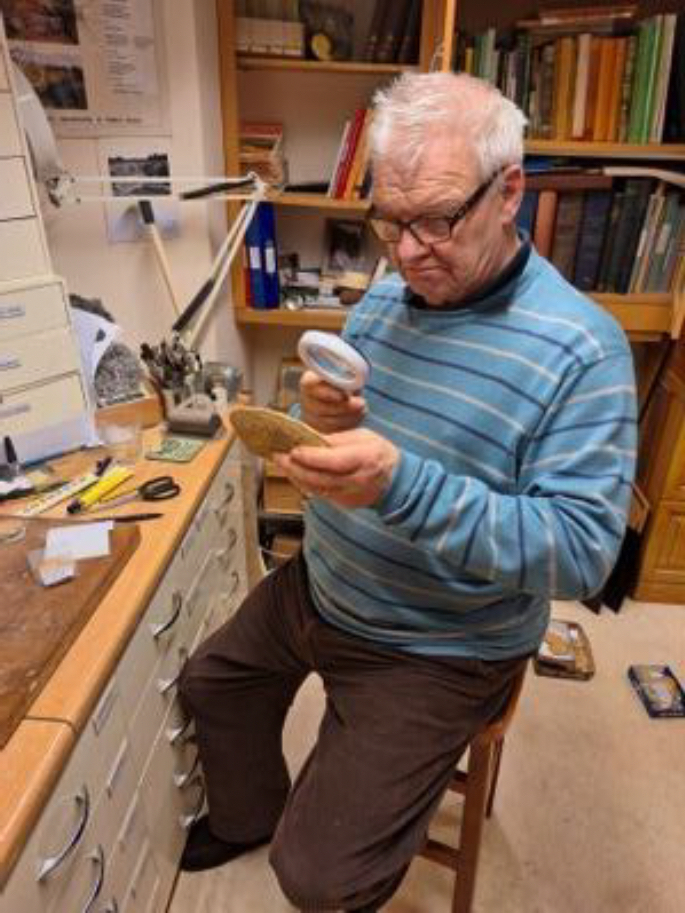
In October 2019, the writer became custodian of the Stonar School Geological Collection including a substantial number of minerals and fossils collected by the late Philip Werran Curnow (1912 –1992), a former teacher of archaeology and geology at Stonar School near Bath. The Stonar Collection had been mothballed in 2004 when the school Geology Department closed. The following account describes the ex-Stonar school collection, provides biographic detail on Philip Werran Curnow and outlines how the collection will be refreshed so it can continue to be used in future as a geology resource for the community.
Background
Stonar is a day and boarding school for nursery to sixth form. It has an equestrian centre and is located in the Wiltshire countryside close to Bath.
In the summer of 2004, the Stonar School geology department closed. The geology collections associated with it were no longer required and were stored first in one of the school laboratories and then moved to an outside barn. These were far from ideal conditions to store a geological collection. During the period of storage in the barn, the metal filing cabinets holding some of the Curnow Collection began to rust. It seems that the collections remained in this neglected state for some considerable time before they were collected by the writer in October 2019

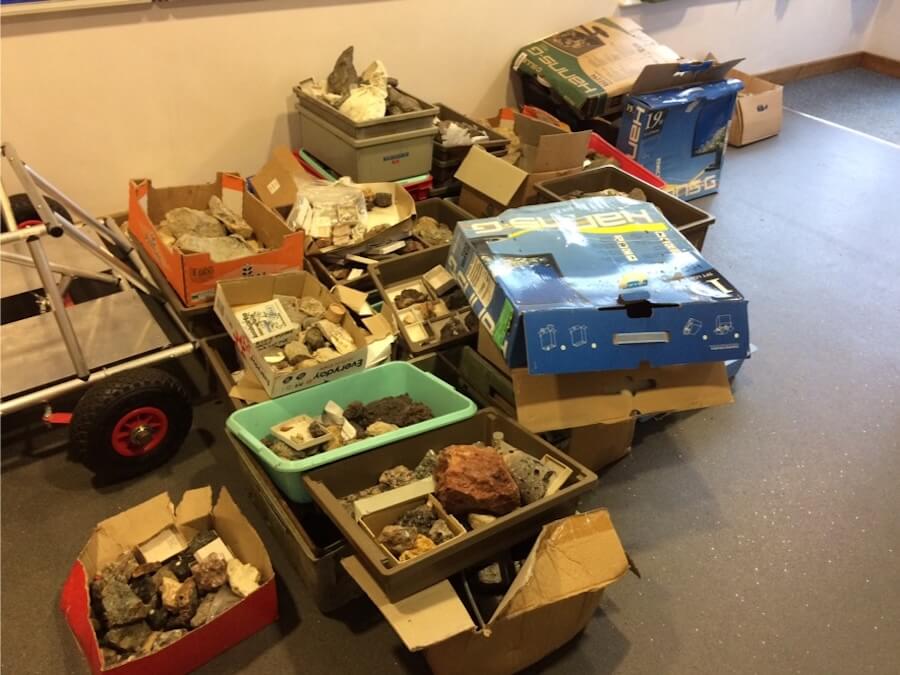
Figs 1 & 2: The state of the Stonar School Geological Collection before it was collected by the writer in 2019. The metal filing cabinets contain part of the Philip Curnow Collection. (photo credit: Claire Sparrow, Stonar School)
The writer was first made aware of the risk to the geological collection at Stonar School by former Head of Geology at the School and Chair of Bath Geological Society, Elizabeth Devon, following her retirement in 2003. Many people gave rock, fossil and mineral specimens to the Stonar School geological collection including Elizabeth Devon, the late John & Pat Bevan-Jones, Pat Bennett, the late George Hibberd, Charles Hiscock, the late Ron Smith, Christopher Steane and Malcolm Tucker. Geology students at the school and members of Bath Geological Society also added to the collection, but the biggest contribution came from Philip Curnow.
At about the same time, another fossil collection belonging to George Cross, a Bath Geological Society member (Carpenter, 2004) was also looking for a new home, following the collectors death. The Cross Collection including many local fossils was eventually acquired by Gloucestershire Geology Trust, but in 2019, the writer discovered that the Trust had disposed of the entire collection without attempting to rehome it. This unfortunate situation illustrates just how vulnerable private collections are, without the protection and protocols normally associated with accredited museums. The Cross Collection with a large number of local fossils, would have been an ideal ‘handling’ resource for Somerset Earth Science Centre.
Both the Cross and Stonar Collections suffer from lack of associated documentation, something that is difficult to correct or improve retrospectively. Because of the lack of information and limited research potential, most of the Stonar School Collection will be used in ‘handling’ collections. There are few museum-grade mineral and fossil specimens within the collection. When discussing this with friend and geologist, Alan Bentley, it was interesting to hear his thoughts on geology collections and in particular those intended to inspire and enthuse. Alan Bentley says, ’Ideally, specimens intended to demonstrate the geology or palaeontology of a location need the best possible examples, plus meticulous recording of the era/stage, lithostratigraphic unit, horizon, Zone, subzone and locality (plus date of collection if the source is at risk of disappearing). This often means repeat visits to a locality over several years. Specimens for teaching about their own composition (petrology) do not necessarily need all that, unless they are rare, specialist or unique. But they do need to be decent specimens and in the case of minerals, tolerably large to handle so as to sense the weight, density and texture (the rule of thumb used to be the size of a cricket ball - not always possible admittedly), clean of all surface grime and showing some sharp crystal faces, cleavage or other characteristic form. Boring-looking rock specimens can be enhanced by having one polished face, or accompanied by a thin-section microscope slide’.
Philip Werran Curnow
Philip Curnow whose private collection was donated to Stonar School following his death in the summer of 1992, taught archaeology and geology at Stonar School. There are no field note books associated with Philips collection and we know precious little about his interests and activities other than his passion for Cornish geology (Elizabeth Devon, personal communication). His wife, Margaret Curnow, was deputy headmistress of Stonar School until her death in July 1990. Philip was elected a Fellow of the Geological Society of London on 21 June 1950 (no.7039) but was removed from the list at the Council Meeting of 8 January 1964 – although no specific reason is given (Richard Ashley and Caroline Lam, Geological Society of London, personal communication). On Philip Curnow’s admission form to become a Fellow of the Society, his student profession is crossed out and followed by, ‘As from Aug 1st – Curator of Geology, Bristol City Museum’. At this time, Philips address is, 31 Sciennes Road, Edinburgh EH9. He had just completed an Honours degree course in Geology at Edinburgh University, with his final examination in July 1950. With a new role beckoning at Bristol City Museum, it is likely he moved from Scotland shortly after becoming a Fellow to take up his new post in Bristol.
Further research by Richard Ashley shows that Corporal Philip Werran Curnow was awarded the Distinguished Flying Medal for his conduct as a radio operator/air gunner during bombing missions to Norway on the 9th July 1940.
The Philip Curnow Collection
Philip’s Collection contains both minerals and fossils. The dates on specimen labels suggests his most active period of collecting occurred during the 1960s. Back then, access to quarries to collect fossils and minerals was less problematic than it is today; there was certainly less concern over health & safety. Many of Philips geological specimens from the Mendip Hills in Somerset, for example, come from Carboniferous Limestone quarries where access today is almost completely forbidden on safety grounds. The fossils in the Curnow Collection are almost exclusively invertebrates and include some interesting and diverse material including well-preserved Silurian, Carboniferous and Jurassic corals. Local fossils are represented by ammonites, bivalves, gastropods, brachiopods, sponges and plants. There are a small number of vertebrate fossils including some shark teeth from the Blackheath Member of Abbey Wood, London and some fragments of Late Triassic bone bed conglomerate from the Westbury Formation of Aust, South Gloucestershire. The collection has been obtained mostly from UK fossiliferous locailities, but there are also a few exotic/foreign specimens in the collection. At the time of writing, the full extent and detail of the collection is not yet known.
Much of the collection is without identifying numbers or codes (Fig. 3 & 4). The written information in each specimen tray is also limited. For example, a fossil coral specimen in the Curnow Collection may simply say ‘Jurassic’ and ‘Bath area’. Scientific names are used when known, but regrettably, detailed stratigraphy, a desirable requirement for most research collections, is missing.
There had been index cards with details of specimens and localities when the collection was owned by Stonar School (Elizabeth Devon, personal communication), but at the time of writing, these remain missing.
The School Collection
The School Collection, other than the Curnow material, had been catalogued under the headings, rocks, fossils and minerals. The collection catalogue, created when the collection was still in use by Stonar School, refers to groups of rocks, fossils and minerals and describes various ‘shelves’, ‘drawers’ and ‘cabinets’ where they were stored and displayed. Unfortunately, as the collection was moved, a large number of geological specimens were separated from their card trays and labels. As many of the specimens were without any codes or numbers, re-uniting some material will be very difficult.
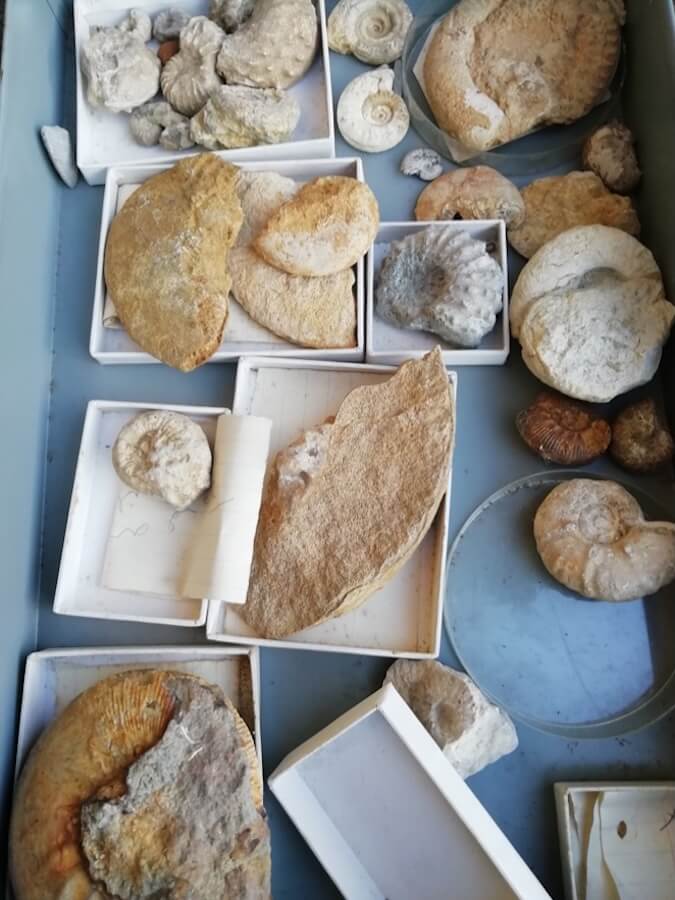

Fig. 3 & 4. Much of the information accompanying the geological collection is missing
A future for the collection
The Stonar School Collection has a few rare and interesting fossil specimens including the crab, Plagiophthalmus oviformis Bell from the Wilmington Sand Member of Wilmington Quarry, Devon, collected by Philip Curnow and an ‘ex-Stonar School’ specimen. This fossil was donated to the Natural History Museum, London (Fig.5), on Saturday 2nd November 2019 by Simon Carpenter. (Museum accession number XXXXXXXX). A small collection of sponge fossils from the Faringdon Sponge Formation have also been identified as a donation to Oxford Museum where they will be used to make up a small handling collection in Philips name for use in their schools' outreach.

Fig 5. The fossil crab, Plagiophthalmus oviformis Bell. From the Stonar School Collection and collected by Philip Curnow. The original specimen label is missing. The accompanying form is a Natural History Museum, London determination slip. (photo credit: Simon Carpenter)
The bulk of the Stonar School Collection will be offered as reference and handling material to local museums, schools and field study centres. When fossils or minerals are surplus to requirement, the agreement is, that they can be given away at public events or sold to raise funds to support geological charities.
It is likely that the collection is widely dispersed. All organisations accepting ‘ex-Stonar School Collection’ specimens will be encouraged to acknowledge this on specimen labels and documents.
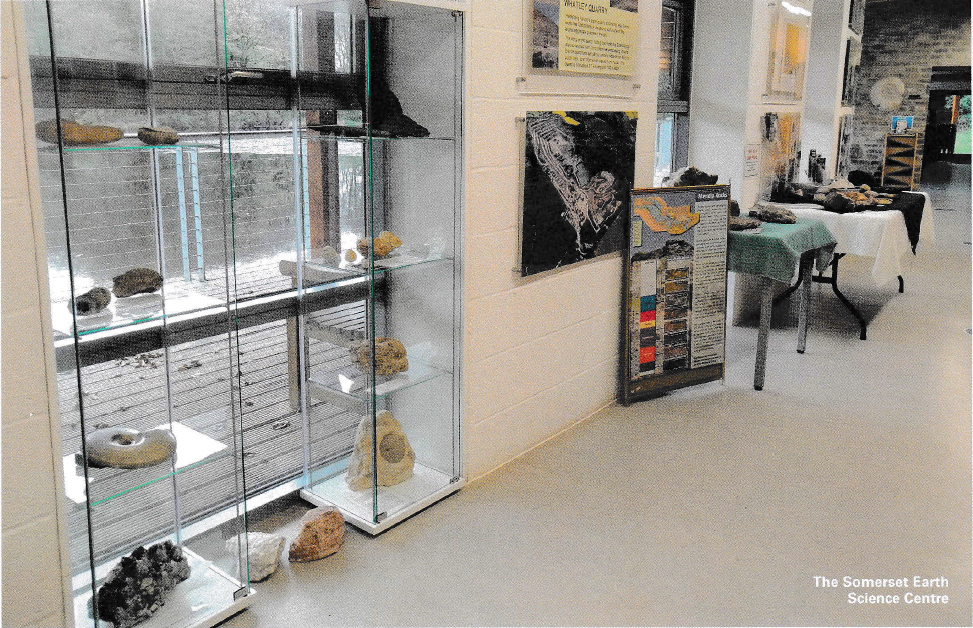
At the time of writing, Somerset Earth Science Centre are interested in taking some of the Stonar material to improve their handling collections. The Centre, based at Moons Hill Quarry, Stoke St Michael work closely with school children across Somerset to improve their understanding of the Natural World and in particular, the Earth Sciences.
References
Carpenter, S. 2014. William George Cross (9 January 1919 – 30 June 2013) amateur Geologist and founder member of Bath Geological Society – an unpublished biography.
Thanks
I would like to start by offering my sincere gratitude to Stonar School for relinquishing care of their geological collection so it can be refreshed and used with the geological community elsewhere. Elizabeth Devon, former Head of Geology at Stonar School alerted me to the threats facing the School geology collection and has helped provide information about the collection and collectors. I am indebted to Richard Ashley for finding out more about Philip Werran Curnow. Before this writing project began, we knew very little about Philip, so it is has been very exciting to discover that he was a Fellow of the Geological Society of London and a past Curator of Geology at Bristol City Museum. I would also like to thank Alan Bentley, friend and geologist for helpful comments and discussions during the course of this project and for assisting in the identification of the fossils and minerals. Finally, I would like to thank the many people who gave their rocks, fossils and minerals to Stonar School and in particular, the contribution made by Philip Werran Curnow.